Purana Manuscripts from 1st- to 2nd-century The word Puranas (;: पुराण, purāṇa) literally means 'ancient, old', and it is a vast genre of Indian literature about a wide range of topics, particularly myths, legends and other traditional lore. Composed primarily in Sanskrit, but also in regional languages, several of these texts are named after major deities such as Vishnu, Shiva and Devi. Bernina 830 Instruction Manual Free. The Puranas genre of literature is found in both and.

The Puranic literature is encyclopedic, and it includes diverse topics such as,, genealogies of gods, goddesses, kings, heroes, sages, and demigods, folk tales, pilgrimages, temples, medicine, astronomy, grammar, mineralogy, humor, love stories, as well as theology and philosophy. The content is highly inconsistent across the Puranas, and each Purana has survived in numerous manuscripts which are themselves inconsistent. The Hindu Puranas are anonymous texts and likely the work of many authors over the centuries; in contrast, most Jaina Puranas can be dated and their authors assigned. There are 18 Maha Puranas (Great Puranas) and 18 Upa Puranas (Minor Puranas), with over 400,000 verses.
The first versions of the various Puranas were likely composed between the 3rd- and 10th-century CE. The Puranas do not enjoy the authority of a scripture in Hinduism, but are considered a. They have been influential in the, inspiring major national and regional annual festivals of Hinduism. Their role and value as sectarian religious texts and historical texts has been controversial because all Puranas praise many gods and goddesses and 'their sectarianism is far less clear cut' than assumed, states.
The religious practices included in them are considered Vaidika (congruent with Vedic literature), because they do not preach initiation into Tantra. The has been among the most celebrated and popular text in the Puranic genre, and is of tenor. The Puranic literature wove with the in India, and both and scholars have commented on the underlying Vedantic themes in the Maha Puranas. Main article: The difference between Upapuranas and Mahapuranas has been explained by Rajendra Hazra as, 'a Mahapurana is well known, and that what is less well known becomes an Upapurana'. Rocher states that the distinction between Mahapurana and Upapurana is ahistorical, there is little corroborating evidence that either were more or less known, and that 'the term Mahapurana occurs rarely in Purana literature, and is probably of late origin.'
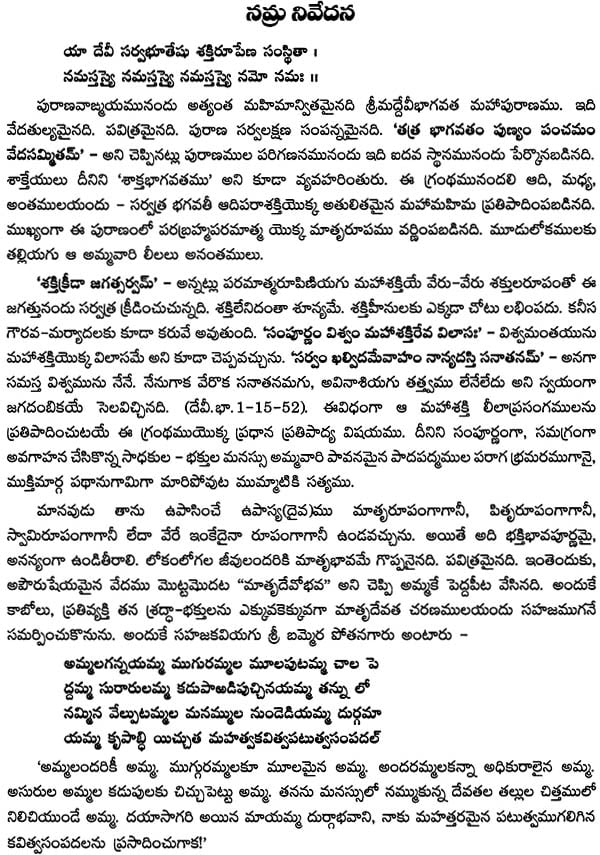
The Upapuranas are eighteen in number, with disagreement as to which canonical titles belong in that list of eighteen. They include among many: Sanat-kumara,, Brihan-naradiya, Siva-rahasya, Durvasa,, Vamana, Bhargava, Varuna,,, Nandi, Surya, Parasara, Vasishtha, Devi-Bhagavata,,, and Hamsa, with only a few having been critically edited. The Ganesha and Mudgala Puranas are devoted to. The, which extols the goddess, has become (along with the Devi Mahatmya of the Markandeya Purana) a basic text for worshipers.
Puranas in telugu pdf free download Telugu version by Veera Raju, published in 1929. Title: Sri Siva Purana You will have to read this in djvu reader, which. Andhra-Telugu The information. Astadasa Puranamulu. The Puranas are authoritative scriptures of the Hindu dharma. Vyasa, the narrator of the Mahabharata.
Sthala Puranas [ ] This corpus of texts tells of the origins and traditions of particular Tamil Shiva temples or shrines. There are numerous Sthala Puranas, most written in, some with Sanskrit versions as well. The 275 Shiva Sthalams of the continent have puranas for each, famously glorified in the.
Some appear in Sanskrit versions in the Mahapuranas or Upapuranas. Some Tamil Sthala Puranas have been researched.
Skanda Purana [ ] The Skanda Purana is the largest Purana with 81,000 verses, named after deity, the son of Shiva and Uma, and brother of deity Ganesha. The mythological part of the text weaves the stories of Shiva and Vishnu, along with Parvati, Rama, Krishna and other major gods in Hindu pantheon. In Chapter 1.8, it declares, Vishnu is nobody but Shiva, and he who is called Shiva is but identical with Vishnu.
The mythology in the Puranas has inspired many and sculptures found in. The legend behind the Krishna and Gopis relief above is described in the Bhagavata Purana. The Puranic literature, stated, is independent, has changed often over its history, and has little relation to the Vedic age or the Vedic literature. Some scholars suggest that the Puranas claim a link to the Vedas but in name only, not in substance. Yet a third group of scholars state that the link is there, at least in spiritual themes and theology.